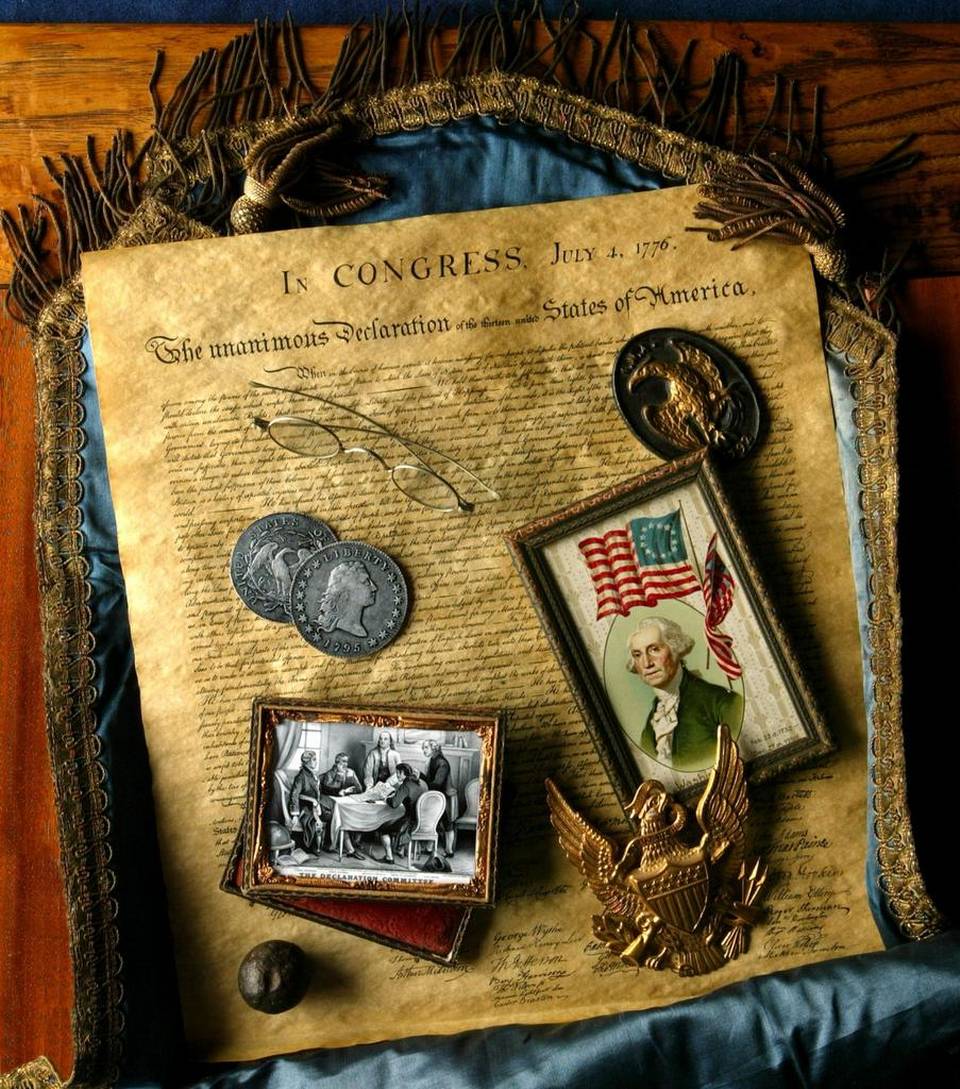
On July 4, 1776, the Continental Congress approved the Declaration of Independence, formalizing our separation from Great Britain and creating a new sovereign nation. The Declaration of Independence was the first of three founding documents called the Charters of Freedom. These documents include the Constitution and the Bill of Rights, and the three charters laid out the basic rights of the American people.
We celebrate these rights and freedoms at the Institute for Media and Public Trust on a daily basis. Our work relies heavily on these rights, especially the First Amendment. That’s why we pause on Independence Day and Constitution Day (Sept. 17) to reflect on our nation’s basic principles.
On Constitution Day this year, we will partner with several Fresno State organizations and some off-campus groups to focus on the five freedoms in the First Amendment. The program will take place during the lunch hour, and there will be food.
Our research has found that most people can’t name all five freedoms in the First Amendment, although they are aware of freedom of speech, press and religion. But most can’t seem to recall the two other important freedoms: the right to assemble and the right to petition government.
There are only 45 words in the First Amendment, but they are powerful:
“Congress shall make no law respecting an establishment of religion, or prohibiting the free exercise thereof; or abridging the freedom of speech, or of the press; or the right of the people peaceably to assemble, and to petition the Government for a redress of grievances.”
In March, more than 60 public relations students rolled out the first phase of an ongoing campaign to educate Fresno State students on the freedoms in the First Amendment. The students are from Dr. Nancy Van Leuven’s public relations writing class and her PR fundamentals class. The project received a grant from 1 for All, a national, nonpartisan program on First Amendment awareness.
The Fresno State project was recognized by the Free Speech Center at Middle Tennessee State University for its excellence. “Activities to measure current student knowledge of the First Amendment included primary and secondary research such as student surveys and studies about media coverage and propaganda. Students also created media strategies including videos, news releases, and multiple content for social media,” the Free Speech Center said.
The next step in the campaign is the Constitution Day program on Sept. 17, which will involve the entire campus in a First Amendment awareness event. We are being helped in this project by the College of Arts and Humanities, the Media, Communications and Journalism Department, the Music Department, the Henry Madden Library, and the campus chapter of the Public Relations Student Society of America.
Our students have designed a creative program on Constitution Day. We will have games, a taco truck, and T-shirts and other giveaways as part of our fun way to learn about the First Amendment.
Music students will play songs that have been banned in the United States, and the Madden Library will have a books that have been banned. These exhibits will help show that we must fight for our freedoms daily.
Let us know if you would like to partner with us. We’d love your participation.


 Institute for Media and Public Trust at Fresno State
Leave a comment