Author: Jim Boren
-
Telling the stories of health care in the San Joaquin Valley
A health reporting fellowship amplifies vital stories of health care in the Central Valley, making impactful journalism accessible to newsrooms across the region. One of the challenges in this era of shrinking newsrooms is giving enough attention to important public policy issues that don’t drive clicks in the way crime, restaurant openings, traffic, weather, and…
-
Valley Public Radio overcomes Congress’ move to silence public radio in America
Congressional defunding of public broadcasting has created challenges for many stations, but KVPR is using the cuts as a catalyst for growth. It has been just over a year since the Republican-led Congress cut federal funding for public broadcasting, citing allegations that PBS and NPR stations exhibited a liberal bias. The intent was clear: to…
-
How artificial intelligence is changing the news business
For journalists, the rise of AI is creating new challenges, particularly around trust with readers, viewers and listeners. You can’t get very far into a conversation with journalists and journalism educators before artificial intelligence starts to dominate the discussion. I found myself in that conversation over dinner recently, and I asked the working editors at…
-
Why using tax dollars to fund local news makes sense in California
State funding builds on the philanthropic bridge that’s sustained local news in recent years, giving newsrooms more stable footing. Local news is dying across America — everyone knows that by now. But California is betting on two bold experiments to help reverse the trend. The first is the California Local News Fellowship, the nation’s largest…
-
What I learned writing obituaries for people who weren’t dead yet
My strangest assignment as a young reporter—and the lesson it taught me about how a life is truly measured. When I was a young reporter at The Fresno Bee, I was assigned to the obituary beat. Along with writing the daily obituaries, I received a second, more unusual assignment: writing obituaries for prominent members of…
-
A question I hear often: What news sources are most reliable?
I offer some specific suggestions below — but as a rule: read broadly, question everything, and don’t overlook local news. Whether I’m giving a speech or teaching journalism students at Fresno State, one question keeps coming up: which news sources are actually reliable? My answer: read broadly. And if you want specifics about news sites,…
-
California officials want to make it harder to see what government is doing. They hope no one objects.
A proposal to restrict access to public records is fueling concerns that transparency is taking a back seat to government convenience. In California, state elected officials are seeking to restrict public access to government records — a troubling development that threatens transparency and weakens one of the public’s most important tools for holding government accountable.…
-
Media Institute at Fresno State strengthens Central Valley’s journalism and creative workforce pipeline
Through workshops, presentations, and community events, the Institute for Media and Public Trust supports media literacy efforts and helps the public better understand today’s media landscape. Eight years ago, when we launched the Institute for Media and Public Trust at Fresno State, misinformation, media literacy, and declining trust in institutions were already recognized as serious…
-
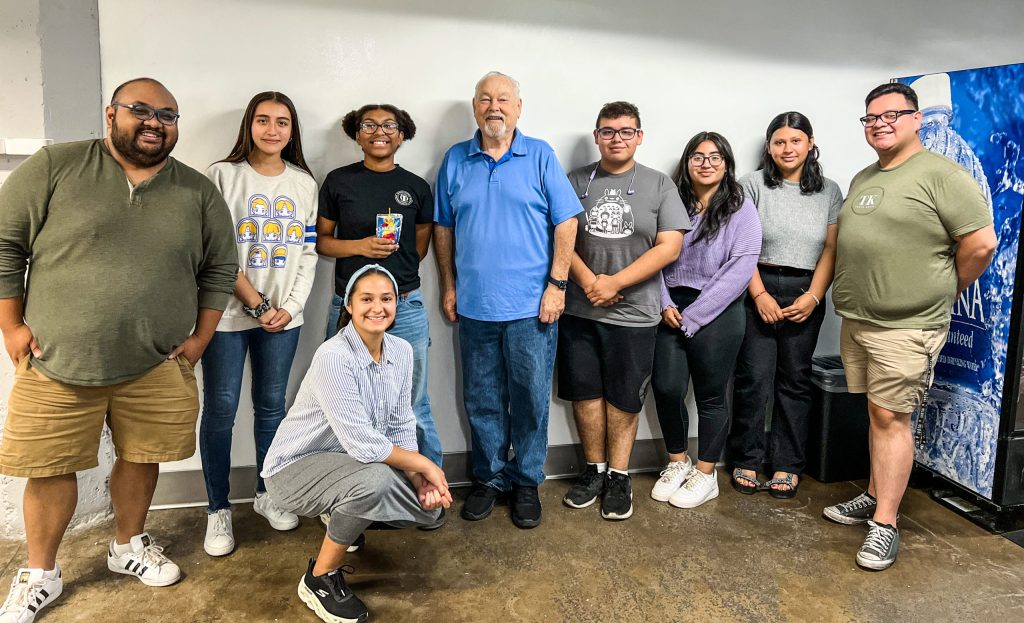
Fresno’s Journalists of Color program is elevating student voices and creating career pathways
Now finishing its fifth cohort, the program equips underserved students with reporting skills, editorial experience, and a clear pathway into college and professional newsrooms. When I served as executive editor of The Fresno Bee, I believed journalism could never fully serve its communities unless newsrooms reflected the diversity, experiences, and voices of the people they covered.…
-

The price we pay for taking journalism for granted
Journalism’s greatest challenge may be that its benefits are easiest to see after they’ve been lost. California just held a primary election. As I watched the returns come in, I found myself thinking less about who won and lost than about a deeper question: What makes an informed vote possible? Not campaigns, advertising, or political…
 Institute for Media and Public Trust at Fresno State