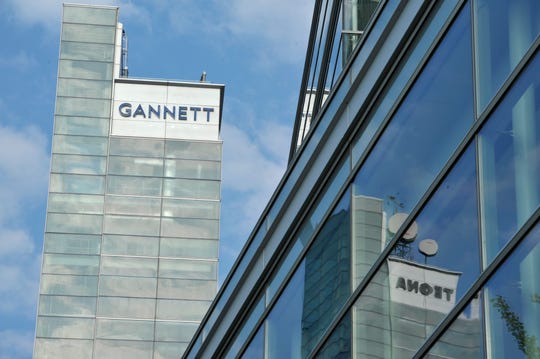
The long-rumored coupling of Gannett and Gatehouse Media was announced on Monday, and should be finalized by the end of the year. With the newspaper business model broken, combining the two companies’ resources is seen as a way to protect journalism through administrative efficiencies and aggressively pursuing a digital transformation.
While Gatehouse’s parent company, New Media Investment Group, is taking over Gannett, the Gannett name will remain and the company will be based at the Gannett headquarters near Washington, D.C. However, New Media Investment Group CEO Michael Reed will be the CEO of the new company.
The $1.38 billion deal will result in annual savings of $275 million to $300 million after two years, according to a joint news release from the companies. While combining business operations will account for part of the savings, the big money is in reducing payroll. That likely means substantial newsroom layoffs in the papers that the new company will operate.
“We believe this transaction will create value for our shareholders, greater opportunities for our employees, and a stronger future for journalism,” CEO Michael Reed said in a statement. It is telling that the first group he mentioned was shareholders. That’s the primary focus of the deal. It’s not maintaining news reporters at the more than 560 daily and weekly papers that the new company will own.
What a tumble newspaper companies have taken in the past decade. The old newspaper model was very profitable when major department store chains were leading the retail industry. They took out lucrative full-page ads, and those ads in the A section of newspapers funded newsrooms across America. It was a time when the industry joke was even bad newspaper publishers could make millions in the business.
But the disruption in retail because of online shopping and other changes have slammed the newspaper industry. Those very expensive ads no longer are being purchased by retailers who have fallen victim to changes in their industry. Look at all the major department stores that are out of business. Remember Gottschalk’s, Weinstock’s, Mervyn’s, Liberty House, Montgomery Ward’s? How many brick-and-mortar stores can you name that are no longer here?
With fewer print ads, and declining circulation cutting into subscription revenue, newspapers have turned to digital to save money and generate revenue from online readers. But few have had any real success with digital income. It’s a bad business model when you’re trading an $8,000 print ad for a $300 banner ad on your website.
So newspapers have been trying to cut their way to profitability. But fewer reporters gathering the news have caused many readers to give up on newspapers who have been charging them more for less content in their print editions.
Now we have the Gatehouse/Gannett merger. It may turn out to be successful. But I wouldn’t bet that by the time 2020 rolls around, major newsroom layoffs will be announced by the new Gannett.



 Institute for Media and Public Trust at Fresno State
Leave a comment