
UPDATED
One of the big challenges for the news business is how to cover California agriculture during a time when there are fewer journalists in newsrooms around the state. Agriculture remains a top industry in California, but coverage mostly revolves around water, environment and immigration.
Those are big stories, of course, but there are many other significant farm-related stories that are going uncovered. California produces more than 400 commodities, and more than one-third of the nation’s vegetables and two-thirds of the nation’s fruits and nuts are grown in the state. Farm coverage should be much deeper than what is being produced by the state’s newsrooms.
Ag has always been a big story in California, but you wouldn’t know it from the attention it receives in most newsrooms.
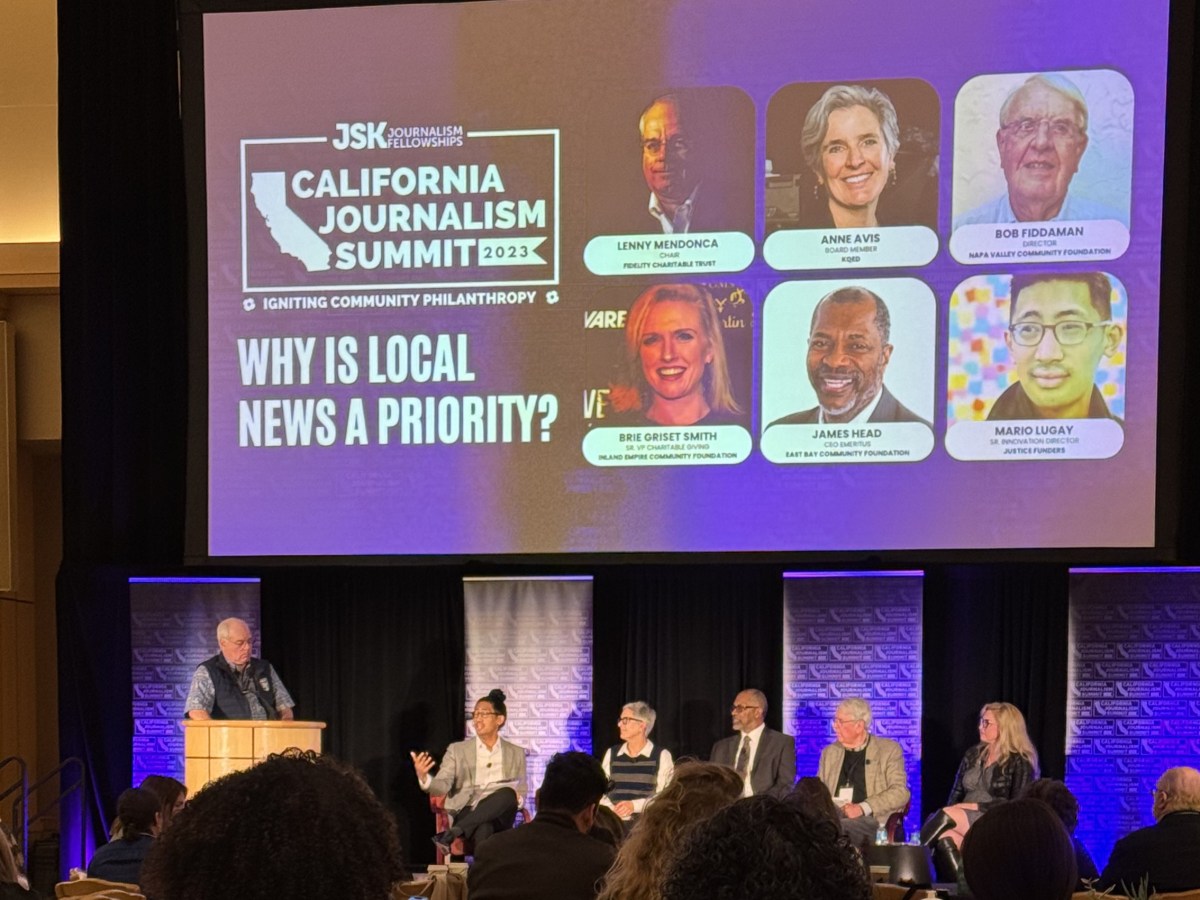
A panel of journalists and farm leaders discussed this issue recently at a California Press Foundation conference in San Francisco. Panel members said stories that aren’t getting enough media attention include the impact of changes in farm overtime laws, groundwater regulation, labor shortages, impact of tariffs on local farmers, mechanization and what the ag industry sees as a negative political environment in Sacramento. They also would like to see more coverage of how various commodities are produced, how they get to market, and to the consumers’ table.
The Cal Press panel included San Joaquin Valley farmer Joe Del Bosque, Fresno County Farm Bureau CEO Ryan Jacobsen, Tim Hearden, editor of the Western Farm Press, and Kaitlin Washburn, agriculture reporter for the Sun-Gazette in Exeter, and a Report for America reporter. I moderated the forum, and represented the Institute for Media and Public Trust.
Del Bosque said the lack of overall coverage of the industry has contributed to fewer consumers understanding where their food and other ag products come from. At a time when there is increased interest in food, many consumers aren’t getting the information they need about how food is produced.
In addition, food safety is a big issue, but coverage often is limited to the times when there is a recall. Consumers need to understand the role of various agencies in safeguarding the food supply.
Jacobsen pointed out to the publishers and editors in the audience that farm stories are very visual, and that seems to be the emphasis of news websites as they put more video content online. He wondered why assignments editors aren’t reaching out to farmers more for these “visual stories.” Jacobsen also said that fewer reporters have a solid background on farm issues, and that is often reflected in the stories they produce.
Washburn, a Report for America journalist, was hired by her newspaper to do farm coverage, and she said there was a big learning curve when she started last June. But now she knows the issues much better and has developed industry sources that can help tell the story of agriculture.
The Exeter paper is one of the few newspapers in the Valley that has added an agricultural reporter. Unfortunately, Washburn’s Report for America assignment only lasts a year, and it is unclear what will happen when the assignment ends.
Hearden offered publishers and editors a list of sources they can send their reporters to get background information on farm issues. Key sources, he said, are county farm bureaus and UC Cooperative Extension offices.
Editors need to figure how they should be covering this industry, even as they have had to reduce reporting resources because of a broken business model.



 Institute for Media and Public Trust at Fresno State
Leave a comment