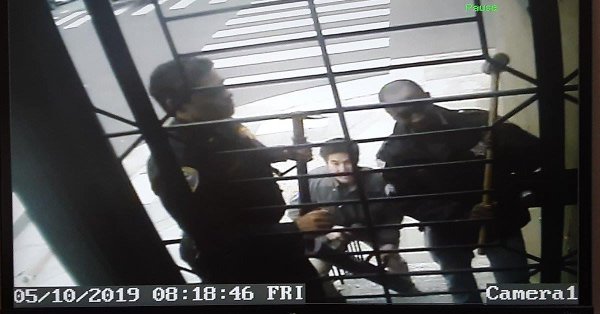
The Institute for Media and Public Trust vehemently protests the actions of the San Francisco Police Department in raiding the home of a freelance journalist in an attempt to find out who leaked a sensitive report on the death of the San Francisco public defender.
This heavy-handed attempt to discover the identity of a confidential source threatens journalistic independence, and is at odds with the California shield law, which protects journalists from divulging confidential sources. Police clearly were trying to send a message to San Francisco journalists with their aggressive tactics, and the police chief continues to stand by his decision to raid the reporter’s home.
Freelance journalist Bryan Carmody’s home was raided Friday by about 10 police officers who tried to break into his front gate with a sledgehammer. Carmody let them in after seeing a search warrant, and police at gunpoint took notebooks, computers, phones, cameras and other personal property, according to media reports.
“California’s shield law, which voters enshrined in the state Constitution in 1980, protects journalists from being held in contempt for refusing a subpoena to provide their sources, notes or any other unpublished material obtained in the course of news-gathering,” The San Francisco Chronicle said in an editorial. “State law also prohibits search warrants from being issued for material protected by the shield law. That suggests the warrants police served on Carmody’s home and office last week should not have existed.”
Some in San Francisco are justifying the raid on the basis that Carmody is a freelancer, and not on the staff of a media organization. But Carmody has a press pass issued by the San Francisco Police Department, and freelancers have the same First Amendment protections that other journalists enjoy.
San Francisco Chronicle Editor-In-Chief Audrey Cooper’s statement on the issue makes the point very well:
“If you side with those who believe this raid is justified, for whatever reason, you open the door to officials being allowed to decide what news they like and what they don’t, which journalists they like and which ones they do not. That will not end well for anyone.”




Leave a Reply