UPDATED
An experiment at three of the McClatchy Company’s smaller publications has industry observers wondering whether this is a first step in reducing the daily print schedule of other newspapers in the media group. McClatchy owns 30 newspapers around the country, including The Miami Herald, Charlotte Observer and Kansas City Star, as well as the Sacramento, Fresno and Modesto Bees, which were the McClatchy family’s founding newspapers.
As the newspaper business model has changed, news leaders have been looking at ways of reducing costs, and print is a major cost. Fewer people are reading print, but it still generates income through subscriptions and advertising. But for how long? The downward trend in print revenues suggests that this once reliable income pipeline will soon end. That’s why newspaper companies are transitioning to digital as quickly as possible.
McClatchy CEO Craig Forman made this point when reporting first quarter results last month.
“Our focus on paid digital subscriber growth is a key performance measure in our continuing digital transformation and a contributor to improving our audience revenue trend this quarter,” said Forman. “We have tightened our paywalls, improved our ability to convert viewers to paid subscribers and sharpened our targeting for our digital products. As a result, we achieved nearly 60% growth in digital-only subscriptions, reaching 179,100 at the end of the first quarter of 2019.”
So it’s not surprising that McClatchy is cutting back print in three small markets. Clearly, digital must be the future, but is there a reasonable business model for printed newspapers? That’s what McClatchy and other newspaper companies are trying to figure out.
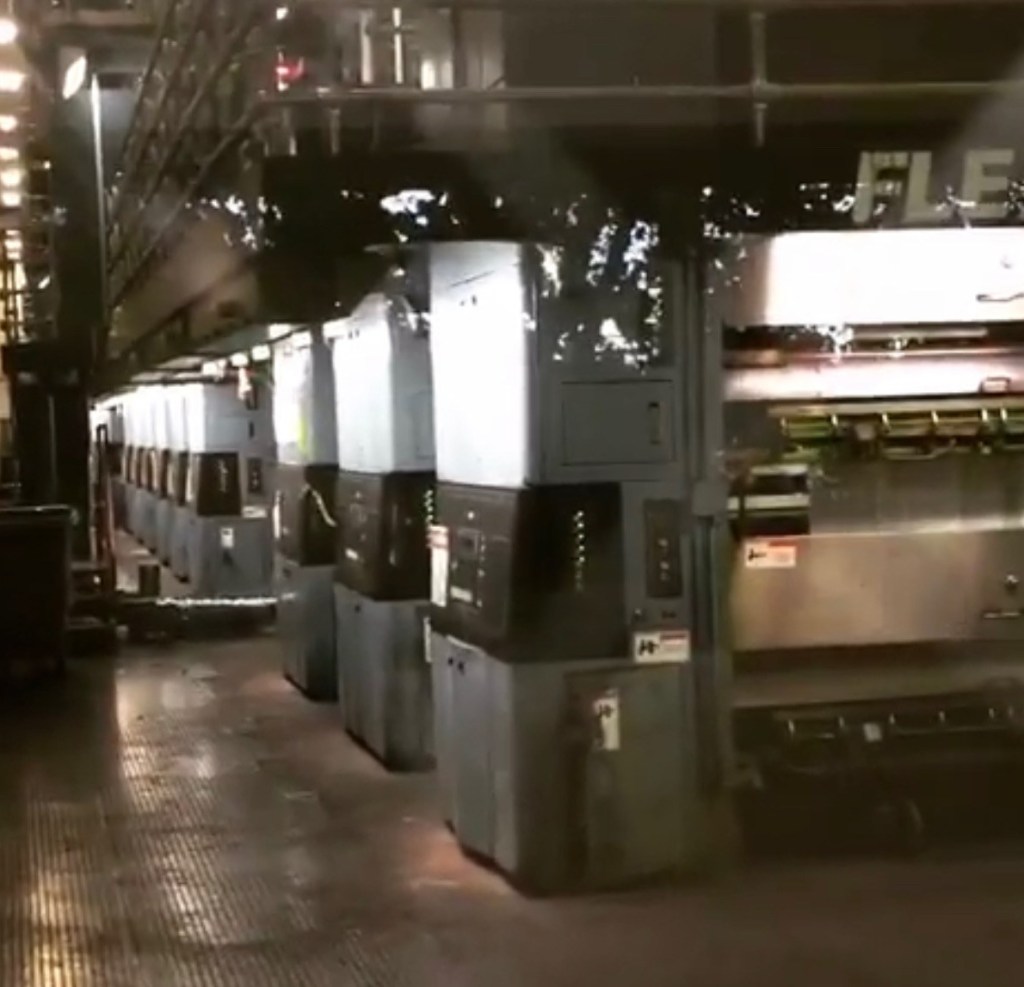
McClatchy had previously closed printing operations at several of its papers, while continue to publish seven days a week in those markets. The Fresno Bee, for example, is printed at The Sacramento Bee, and trucked back down the Valley to be delivered to local subscribers. (Disclosure: I retired in 2018 as Executive Editor of The Fresno Bee).
In recent years, most newspaper companies have at least looked at the option of reducing the number of days a week papers are published. It would be unwise not to consider that possibility as a way of preserving newsroom resources, and financial viability. Make no mistake, newspaper companies cannot survive by looking in the rear-view mirror.
Older readers remain loyal to print, even as the size of the daily paper has been reduced and the cost for a subscription has substantially increased. But in the long run, print readers are not considered a priority by most newspaper companies. It’s just too costly to print and deliver the paper on a daily basis.
Now McClatchy has embarked on an initiative in three small communities in its newspaper portfolio to see what the reader reaction will be to such a major change.
McClatchy is dropping Saturday print at its newspapers in Myrtle Beach, South Carolina; Durham, North Carolina, and Bellingham, Washington, and branding the change as “Digital Saturdays” in which the news content will be enhanced on the digital sites.
Poynter has this from Sara Glines, McClatchy’s Carolinas and East regions president and publisher, about the changes. She said readers will get the same content, but in a digital format.
“In fact, Glines said readers will get more. Extra comics and puzzles will appear in the Friday and Sunday print editions. And the Saturday e-edition will include even more international, national, sports and entertainment coverage than the Saturday print edition normally carried,” Poynter reported.
“We’re trying to really impress upon people that this is not a loss of local content,” Glines said. “There is no change in our reporting staff — when they’re reporting, what they’re covering, how many days a week they work. There is no change in that. This is not a change in our content strategy. What this is is a way to start looking at our digital product and promoting that more to our readership.”
Poynter’s Tom Jones zeroed in on what this means for the other McClatchy newspapers: “Let’s get to the bigger issue here. This feels like the first few steps in moving every paper in the McClatchy chain to a fewer-than-seven-days-a-week print product.”
That’s not the plan at this point, Glines said, adding that McClatchy leadership will be monitoring the experiment.
“We’re going to try to do it in the least disruptive way to those who continue to love print and we’re going to try to hold on to print and make that the best product we can for as long as we can,” Glines said. “But we need to continue to make changes and this is one them.”

 Institute for Media and Public Trust at Fresno State
Leave a comment