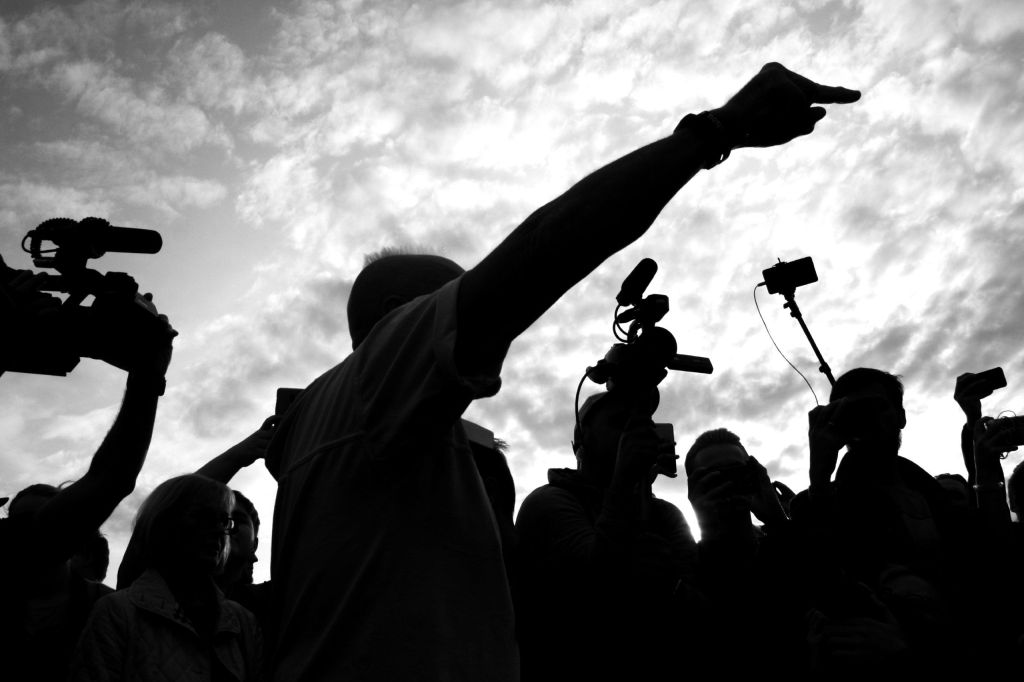
Intimidating reporters and trying to criminalize their work undermines press freedom and accountability.
Anyone who has been reading this column for long knows that I’ve grown increasingly concerned about a disturbing trend in American politics: Public officials, from President Trump to the mini-MAGAs in local government, responding to tough questions by attacking the reporters who ask them or shutting them out altogether.
Rather than address legitimate questions with facts and explanations, these officials seem to believe that discrediting the person asking the question is an acceptable substitute for providing an answer. It isn’t. And the consequences reach far beyond the reporters being insulted or excluded.
When politicians avoid answering questions by calling reporters names or belittling their role, it serves no one well. There will always be tension between reporters and politicians, and that’s a good thing. It helps keep the two from becoming too cozy with one another. But maintaining civility matters, too. Politicians and reporters may have different roles and competing interests, but both benefit when they treat each other with respect.
Tough questions and accountability don’t require personal attacks, and mutual respect doesn’t mean going easy on those in power.A free press is essential to a functioning democracy because journalists ask questions the public has a right to have answered. They scrutinize decisions made in our name, examine how taxpayer money is spent and hold elected officials accountable for their actions.
When officials refuse to answer questions or attempt to intimidate those who ask them, they aren’t simply disrespecting journalists. They are disrespecting the citizens those journalists serve.
We see it often with Trump, and just the other day, Maryland Congressman Andy Harris clashed with a student journalist by mistakenly claiming that Maryland’s two-party consent law prohibited her from recording him at a public press gathering. I’m proud that University of Maryland student journalist Cat Murphy stood her ground.
Murphy deserves credit for understanding that asking questions and documenting the answers are fundamental parts of journalism. Student journalists, like their professional counterparts, have a responsibility to seek information and hold public officials accountable.
This anti-press trend should concern all of us, regardless of our political affiliations. The role of a free press in a democracy is not to make public officials comfortable, protect their feelings, or give them an opportunity to deliver only the messages they want the public to hear. Reporters are there to ask questions on behalf of the people who pay the bills, elect the officials, and live with the consequences of government decisions.
That doesn’t mean reporters should be disrespectful, even when politicians are disrespectful toward them. I’ve always advised my journalism students, and before that, the reporters I supervised as an editor, to press hard with their questions.
Don’t back down simply because an official is uncomfortable or refuses to answer. But do it with composure and professionalism. Tough questions don’t require a hostile tone, and standing firm doesn’t mean losing your cool.
A reporter’s job includes conveying a politician’s talking points and explaining the official’s position so readers can understand the full story. But reporters are not politicians’ public relations representatives.
Their responsibility is not to help elected officials promote themselves or control the narrative. It is to inform the public, scrutinize those in power and hold them accountable. That means asking tough questions, pressing for specifics and refusing to accept talking points as a substitute for meaningful answers.
But the public is not oblivious to what is going on. A recent Knight Foundation–NORC poll found that 53% of Americans believe the president has gained influence over the news media, while 90% view government pressure on the press as a problem. That concern crosses party lines, underscoring that press independence is not simply a partisan issue. It is a matter of public accountability and the kind of democracy we want to preserve.
I hope government officials read this report closely, particularly those who seem determined to avoid answering legitimate questions from the press—even when they call a news conference ostensibly to answer them.
A news conference should be an opportunity for public accountability, not a stage-managed exercise in evasion. The public deserves direct answers, and a free press must be able to ask the difficult questions without intimidation or interference.
Journalism requires both courage and restraint. Reporters must be willing to ask the questions politicians would rather avoid, but they must do so with fairness, composure and respect for the facts.
Their job isn’t to make politicians comfortable or uncomfortable, or help them sell their talking points. It’s to give the public the information it needs to hold those in power accountable. That responsibility is too important to abandon, no matter how disrespectfully a politician responds.




Leave a Reply