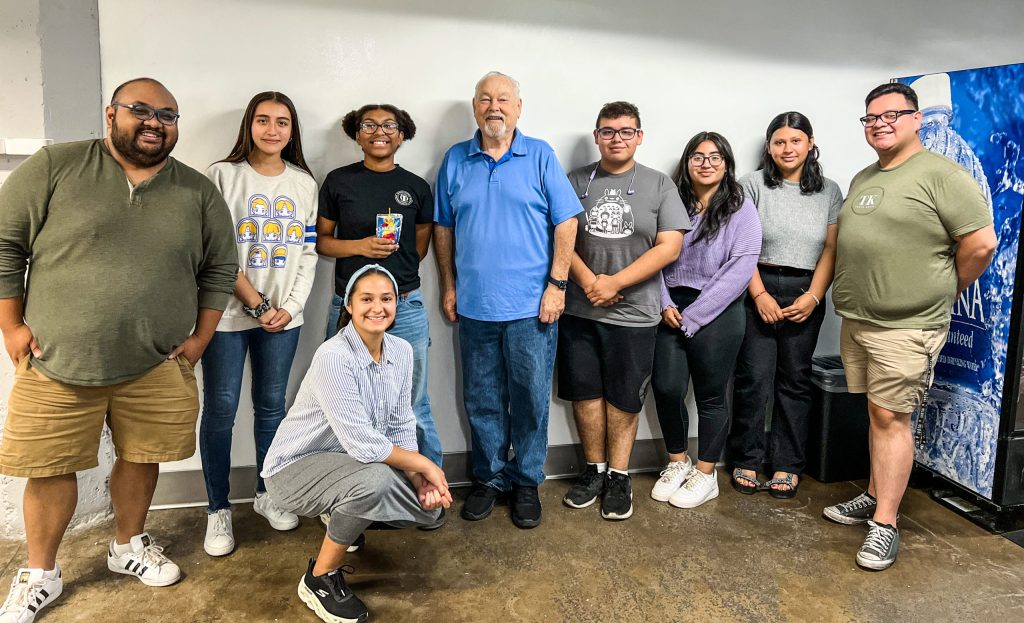
Now finishing its fifth cohort, the program equips underserved students with reporting skills, editorial experience, and a clear pathway into college and professional newsrooms.
When I served as executive editor of The Fresno Bee, I believed journalism could never fully serve its communities unless newsrooms reflected the diversity, experiences, and voices of the people they covered. This belief is widely shared across the news industry, but turning it into meaningful change meant offering more than good intentions or one-time hiring initiatives.
It required building accessible pathways into journalism much earlier—especially for young people with talent, curiosity, and perspective, but limited access to training, mentorship, or opportunity. I began to imagine a program that would start in high school, particularly in underserved communities, and help students of color see journalism not as an unreachable profession, but as a field where their voices, perspectives, and lived experiences truly belonged.
At the same time, many high schools no longer have student newspapers at all, which has narrowed one of the most important early entry points into journalism and made intentional pathways even more necessary.
The goal was never simply to diversify newsrooms in a numerical sense. It was to strengthen journalism itself through broader perspectives, deeper community understanding, and richer, more representative storytelling.
For years, the idea remained just that: a concept without a platform. But after I retired and began teaching journalism at Fresno State, that vision finally found a home when I created the Institute for Media and Public Trust.
With the support of the Media, Communications and Journalism Department, a deeply committed steering committee of journalists and educators, and generous foundation funders, we were able to bring that idea to life through the Journalists of Color (JOC) training program.
What began as a vision for building a stronger, more representative pipeline into journalism became a sustained effort to provide students with mentorship, professional training, financial support, and meaningful opportunities to report on the stories of their own communities.
We housed the program in the local Youth Leadership Institute (YLI), an organization with a strong track record of elevating youth voices and supporting young people as civic leaders. YLI’s Johnsen Del Rosario serves as program manager, guiding the day-to-day work and ensuring the program remains grounded in its mission. Ashley Flowers is the JOC program coordinator. The YLI team’s efforts have been crucial to the success of the program.
I committed to sustaining the effort over time through community-based fundraising, as well as grants from foundations and organizations that share a belief in youth media and storytelling. Early support from The California Endowment and the James B. McClatchy Foundation was instrumental in launching the program. Their investment provided not only essential financial backing, but also early validation that this work mattered and could grow.
Because the program was launched during the COVID years, we started slowly. But it is now completing its fifth year, having evolved far beyond its original classroom-based design. It has become a mentoring network, a professional pipeline, and for many students, a first real entry point into journalism.
Most importantly, it has demonstrated that when institutions invest intentionally in young people—particularly in underserved communities—they do more than create opportunity. They help shape a stronger, more inclusive future for journalism itself.
One of the program’s first graduates, Jazmin Alvarado, joined JOC as a senior at Fresno High School. She recently graduated from California State University, Fresno with a bachelor’s degree in broadcast journalism and a minor in Spanish. While at Fresno State, she served as editor-in-chief of The Collegian and completed internships at several local television stations, most recently with ABC30.
Her career has now expanded to an internship at the Los Angeles Times. More than 1,000 potential interns applied for one of the 22 slots in this summer’s program, according to The Times.
Jazmin’s journey reflects the kind of transformation the JOC program was designed to support. She is now part of a growing pipeline of students following similar paths: Students preparing to make meaningful contributions to local journalism and help shape its future.
According to Del Rosario, the program currently supports 16 student reporters. Even at this stage, participants are already emerging as editorial leaders at their college publications. Judith Flores Mora serves as editor-in-chief of The Syrinx at Fresno Pacific University. At The Collegian, Josiah Poynter—currently managing editor—is set to become editor-in-chief next year, while Matthew Echavez serves as assistant copy editor.
Some other JOC participants have since moved out of the region to attend college or pursue other opportunities. While their paths have taken them in different directions, the training and experiences they gained through the program continue to provide a strong foundation for their future success.
All participants have been part of a groundbreaking regional effort designed to provide hands-on learning, skill development, and real-world reporting experience. The program supports not only academic and professional growth, but also helps students build confidence, strengthen collaboration skills, and explore potential career pathways. Even as they move into new environments and new challenges, their experiences in the program continue to shape how they see themselves as journalists and as community storytellers.
By identifying and supporting young talent early, the JOC program helps students develop confidence and practical experience that can open doors to meaningful careers. Their success demonstrates how community-based journalism initiatives can create lasting pathways for local students to become storytellers, civic leaders, and trusted voices in the communities they serve.
Overall, this program demonstrates what becomes possible when universities and community partners commit to long-term investment rather than short-term opportunity. I am immensely proud of what we have created together.
By combining sustained funding, rigorous training, and consistent mentorship, it builds a pathway that not only prepares students for careers in journalism but also strengthens the broader media landscape of the San Joaquin Valley. Most importantly, it helps ensure that the next generation of reporters reflects the communities they serve, bringing depth, trust, and lived experience to the stories that shape public understanding.
(This column has been updated).

 Institute for Media and Public Trust at Fresno State
Leave a comment