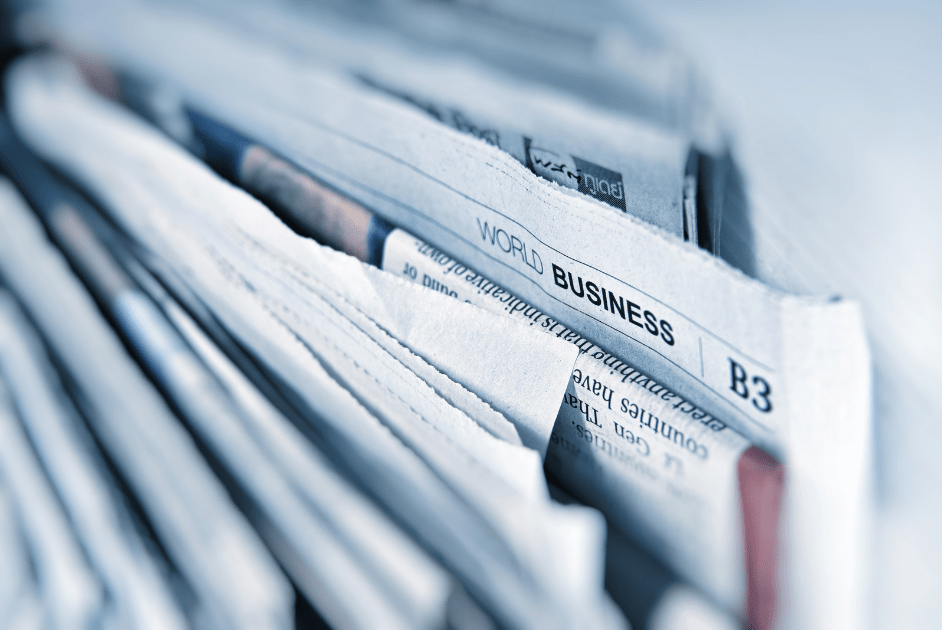
Journalism’s greatest challenge may be that its benefits are easiest to see after they’ve been lost.
California just held a primary election. As I watched the returns come in, I found myself thinking less about who won and lost than about a deeper question: What makes an informed vote possible?
Not campaigns, advertising, or political messaging, but the civic infrastructure that helps citizens understand issues, evaluate competing claims, and assess their choices in the first place. Before people can decide whom to support, they need the tools, institutions, and habits that make meaningful judgment possible.
That thing is journalism. And it is in trouble in ways that most people, caught up in the noise of any given news cycle, have not fully reckoned with. Without trustworthy reporting, elections — and everything else that depends on an informed citizenry — become far more fragile than we like to admit.
When many of my generation were growing up, the news carried a certain weight.
I don’t mean that as nostalgia, though I understand if it sounds that way. I mean it literally. The news felt like it mattered. Like someone had decided it was worth your time, and worth theirs.
The morning paper was folded on the kitchen table beside a cup of coffee. Families gathered around the television at dinnertime to hear trusted voices explain the events of the day. Reporters were not celebrities or influencers or partisan warriors. They were professionals whose job, above all else, was to investigate, verify, and inform. Most of them would have been embarrassed to be called anything else.
Journalism moved more slowly then, and perhaps that was part of its strength. Editors checked facts carefully. Reporters spent weeks — sometimes months — on a single story. A printed correction was taken seriously, because accuracy wasn’t just a professional standard; it was a source of institutional pride.
People didn’t always agree with what they read or heard. But there was a shared understanding — a kind of social contract — that the goal of journalism was truth, and that the people practicing it were at least trying to get there honestly.
Today, that world feels almost unrecognizable.
Now the news reaches us every minute of every day. Headlines flash across our phones, often before reporters have had time to confirm the details — before anyone has made a phone call, reviewed a document, or asked the most basic question: is this actually true?
Social media allows information and misinformation to spread around the globe in seconds. Opinion is dressed up as fact. Outrage drives clicks. Algorithms decide what millions of people see, not based on what matters, but based on what provokes. And many Americans are left asking a question that would have sounded genuinely strange fifty years ago: Who can we trust?
I have spent a lifetime in this profession. And I will tell you honestly: that question keeps me up at night.
To understand where we are, we have to understand how we got here.
For most of American history, journalism ran on a simple and surprisingly effective business model. Newspapers did not make most of their money from subscriptions. They made it from advertising. A family might pay a few dollars a month for the paper, but the real revenue came from local businesses — furniture stores, car dealerships, grocery markets — buying space to reach customers. Classified ads for jobs, apartments, and used cars filled page after page and quietly subsidized the salaries of reporters.
That system worked remarkably well for decades. A local newspaper could afford a large newsroom because advertisers had very few other options. In many towns, the newspaper was not just a business, it was an institution, as central to civic life as the courthouse or the church.
It was where the community saw itself reflected. Where a family might find their child’s name in the honor roll. Where a farmer checked the commodity prices. Where a grieving family published an obituary and felt, for a moment, that a life had been properly witnessed.
Then the internet arrived. At first, it seemed like a miracle — and in many ways, it was. News became instant. Information became free. Readers could access stories from anywhere in the world with a single click. But while newspapers were celebrating their digital reach, they failed to see the danger hiding just beneath it.
Technology companies were not interested in producing journalism. They were interested in capturing attention, and attention attracts money. Companies like Google, and later Facebook, became enormously profitable by targeting advertisements with a precision no newspaper could match.
Suddenly, local businesses no longer needed to buy expensive space in the hometown paper. Then classified advertising collapsed almost overnight. Online marketplaces made it free to list a job, an apartment, a used car. Page after page of small ads that had quietly sustained local newsrooms simply vanished — not over years, but in what felt like moments.
And all of us participated in this collapse, whether we meant to or not.
Every time we searched online instead of subscribing to the local paper. Every time we expected news to be free because it happened to arrive that way. Every time we bought from a national online retailer instead of the local store that used to run ads in the community paper. Convenience won. Speed won. Low prices won. And something essential was lost in the bargain — something we are only now beginning to fully reckon with.
Newsrooms shrank. Bureaus closed. Local newspapers disappeared entirely in many communities. Today, hundreds of communities across America are what researchers now call news deserts — places with little or no reliable local reporting. Counties where no one is watching the school board. No one is reviewing the county budget. No one is asking why that contract went to that company.
And when local journalism disappears, something more than information disappears with it. Studies have shown that when local journalism declines, civic participation drops, public distrust rises — and local government spending actually goes up, because there is no longer anyone watching how public money is spent.
Journalism, it turns out, is not just a public good. It is a financial watchdog. And when it goes away, we pay for it in more ways than one.
We now have access to more information than any society in human history. And yet many people feel less informed than ever. We are drowning in headlines but starving for understanding.
I spent 48 years at The Fresno Bee. I gave that paper my career, my energy, and — I say this without bitterness — more than half of my life. And I am proud of that. Deeply proud.
I remember when we had nearly 200 newsroom staff membefrs and roughly 900 total employees — reporters, editors, photographers, pressmen, circulation drivers, advertising teams. Nine hundred people working every day to produce journalism for this community. There was a hum to that building. A sense of collective purpose that I have never quite found anywhere else.
With a staff like that, the expectations were extraordinary. We were expected to break a major story nearly every day. Not every week. Every day. If the Sunday paper didn’t carry at least three strong front-page stories, the metro editor could count on a difficult conversation Monday morning with the editor in chief.
That was the culture: aggressive, competitive, and deeply accountable to the community we served. We had reporters who specialized in education, city hall, agriculture, water policy, the courts, business, and politics. People had the time to dig, to cultivate sources, to truly know their beats — not just skim them.
That kind of journalism is what holds power accountable. And it takes people, time, and resources to produce it.
But that era did not last.
As the internet drained advertising revenue through the late 1990s and into the 2000s, newspaper owners faced a choice. They could experiment boldly with new business models — invest in digital journalism, find ways to ask readers to pay directly for work they valued, reimagine what a news organization could be in a new era. Some tried. Most didn’t — not seriously, not quickly enough.
Instead, the industry reached for the tool it knew best: the budget knife.
Cut the travel budget. Merge the copy desk. Consolidate beats. And when that wasn’t enough — cut people. The logic, repeated in boardrooms across the country, was that a leaner newsroom could still produce quality journalism. That you could do more with less. That readers wouldn’t notice the difference.
They noticed.
Every round of layoffs made the paper a little thinner, the coverage a little shallower, the community a little less served. And a less essential newspaper lost more subscribers, which led to less revenue, which triggered the next round of cuts. It was a slow, grinding spiral — and the people running these organizations could see it happening, even as they kept pulling the budget lever.
The cruelest part was that cutting people didn’t actually solve the financial problem. It only delayed the reckoning while destroying the very thing — the reporting, the relationships, the hard-won institutional knowledge — that gave newspapers their value in the first place. You cannot cut your way to relevance. But for more than two decades, much of the industry tried.
Which brings me to my worst week in journalism.
Under budget orders from the corner office, I called 17 newsroom employees into my office, one by one, and told them they no longer had jobs. Seventeen conversations. Each one lasting only a few minutes. Each one ending with someone walking out of my office carrying the weight of an uncertain future — a mortgage, a family, a career they had devoted themselves to.
I still think about those conversations. I still remember some of their faces. I suspect I always will.
The crisis facing journalism today is not only financial. It runs far deeper.
The first problem is the speed trap. In the old newsroom, speed mattered — but accuracy mattered more. An editor would rather hold a story an extra day to get it right than be first with something wrong.
That calculus has completely flipped. Today, the pressure to publish instantly is relentless. Social media rewards whoever posts first, not whoever gets it right. And in that race, mistakes happen — details get wrong, context gets stripped away, corrections get buried beneath the next wave of breaking news.
The irony is that speed has made journalism less reliable at exactly the moment when reliability matters most. And every high-profile error becomes ammunition for those who want to dismiss all journalism as untrustworthy.
The second is the misinformation flood. False information has always existed — rumors and propaganda are as old as human civilization. But the internet gave misinformation a delivery system of unprecedented scale and velocity. A fabricated story, a manipulated image, a misleading headline can reach millions of people within hours, long before anyone has the chance to fact-check it.
And once a false story takes root in the public mind, it is extraordinarily difficult to uproot. What makes this especially dangerous is that misinformation is often more emotionally satisfying than the truth. It confirms what people already believe. It simplifies complicated situations into clear villains and heroes.
Legitimate journalists, by contrast, are left in the exhausting position of chasing falsehoods they didn’t create, trying to correct a record that many people have already decided they don’t want corrected.
The third — and perhaps the most damaging — is the collapse of public trust. Trust is the invisible infrastructure that makes journalism function. Without it, even accurate, carefully reported information becomes ineffective. And trust in the media has fallen dramatically. A majority of Americans now say they have little or no confidence in newspapers and television news.
Some of this distrust is earned. News organizations have made real mistakes — stories published before they were ready, sources not vetted carefully enough, coverage that reflected the blind spots of newsrooms that too often failed to understand or represent large portions of the country they were supposed to serve. Those failures deserve honest acknowledgment, not defensiveness. We in the press have not always been worthy of the public’s trust, and we should say so.
But some of the distrust has been deliberately manufactured by politciands and corporate interests.
For years, certain political figures and media personalities have discovered that attacking the press is effective — it raises money, energizes supporters, and conveniently discredits any reporting that might be inconvenient. When journalism becomes “the enemy of the people” in the public mind, powerful people benefit from the resulting confusion. The truth becomes just another opinion. Accountability becomes nearly impossible. And the people best positioned to exploit that confusion are precisely the ones journalism exists to scrutinize.
That should frighten us. It frightens me.
The fourth is the attention economy. Newspapers were built for readers who sat down with a cup of coffee and gave a story ten uninterrupted minutes. Today, the average person scrolls past hundreds of headlines a day, pausing for seconds before moving on to the next thing. We don’t read the news as much as we graze it.
Algorithms know that the human brain gravitates toward the most emotionally vivid content — the most alarming, the most outrageous, the most personally confirming. This puts serious, nuanced journalism at a structural disadvantage against content designed purely to trigger a reaction.
The result is a media environment where a carefully reported investigation into municipal corruption gets fewer readers than a 90-second clip of a politician losing their temper. The investigation may matter far more. But it competes poorly in a world optimized for outrage, not understanding.
Finally, there is artificial intelligence — new territory that journalism is only beginning to navigate. AI tools offer genuine promise: helping reporters analyze enormous datasets, surface patterns buried in documents, and extend the reach of investigative work that would otherwise take years. Some newsrooms are already using these tools effectively.
But AI also poses serious threats. It can generate convincing fabricated text, invented quotes, and realistic counterfeit images at industrial scale. Deepfake videos of public figures saying things they never said are already circulating online. We are in an escalating race in a battle for truth, and AI complicates the landscape.
Journalism needs to be on the right side of that race. Right now, the outcome is far from certain. And yet — good journalism still exists.
There are still reporters sitting through city council meetings that almost nobody else bothers to attend — staying until midnight, taking notes, because the public deserves to know what happened. There are still investigative journalists spending weeks on a single story, knowing it may never go viral, because the truth matters regardless of the clicks it generates. There are still local papers barely staying afloat, run by dedicated people who believe — still, stubbornly, in the face of every discouraging signal — that the public deserves reliable information about the place where they live.
There are digital start-ups trying to fill the gap with thoughtful journalism.
But there are just not enough of them. Not nearly enough — not in metropolitan areas, not in rural communities, not anywhere that a city council still meets, a school board still votes, a developer still seeks a zoning variance. The need for accountability journalism has not shrunk. The capacity to provide it has.
That gap — between what journalism could do and what it now has the resources to do — is one of the most consequential and least discussed crises in American public life.
The real question is whether the rest of us value that work enough to support it. Quality journalism is not free. It never was. The only difference is that in the past, advertising quietly paid the bill, and most of us never had to think about it.
Now we are watching, in real time, what happens when that system collapses. Every time you consume news without paying for it, every time you choose the algorithm over the subscription, you are making a choice with consequences. You don’t get to be a passive bystander and then wonder why local news disappeared.
The answer to imperfect journalism is not abandoning journalism. It is demanding better journalism — journalism that is fair, factual, independent, and courageous enough to tell people things they don’t want to hear. Because without trustworthy reporting, democracy weakens at its foundation.
Citizens cannot make informed decisions if they cannot agree on basic facts. Communities fragment. Fear and rumor fill the space where honest reporting used to live. And the powerful — those who benefit most from public confusion — grow stronger in the dark.
At Fresno State, we have built the Institute for Media and Public Trust. There is no other institution quite like it in California. Our work spans four areas: rebuilding public trust in the news media; providing hands-on journalism training to the next generation of reporters; advancing media literacy education so that citizens can better evaluate what they read, watch, and hear; and funding a Journalists of Color program right here in Fresno — because journalism that does not reflect the communities it serves will always have blind spots, and those blind spots cost all of us.
This work matters to me not in an abstract way — in a personal, urgent way. Because I have seen what journalism can accomplish when it is done well. I have seen corruption exposed, injustice corrected, communities protected because a reporter showed up and stayed until they had the truth. And I have seen what happens when that capacity erodes. I have lived through both. And I know which world I want for our children and grandchildren.
The future of journalism will not be saved by nostalgia for a golden age that is not coming back. It will be saved by investment, by education, and by people who still believe that the truth is worth fighting for.
After 48 years, I believe it more than ever.
The future of journalism is not just a story about the media. It is a story about what kind of country we want to live in. It is a story about whether we are willing to do the hard, patient, sometimes uncomfortable work of staying informed, paying for journalism we believe in, and holding those in power accountable.
The deeper issue is whether we can preserve the conditions that make honest elections, honest government, and honest public life possible at all. Whether we are willing to maintain the institutions, imperfect as they are, that keep power visible and citizens informed.
Journalism, at its best, is one of those conditions. It is not perfect. It has never been perfect. But it is indispensable — as indispensable as the vote you cast, the representative you call, the meeting you attend.
The question I leave you with — the one I have spent a half-century living inside — is whether we still believe, together, that the truth is worth the effort it takes to find it. I think we must.
(This column was taken from a speech Jim Boren gave to the National Women’s Political Caucus on June 2 in Fresno).



Leave a Reply