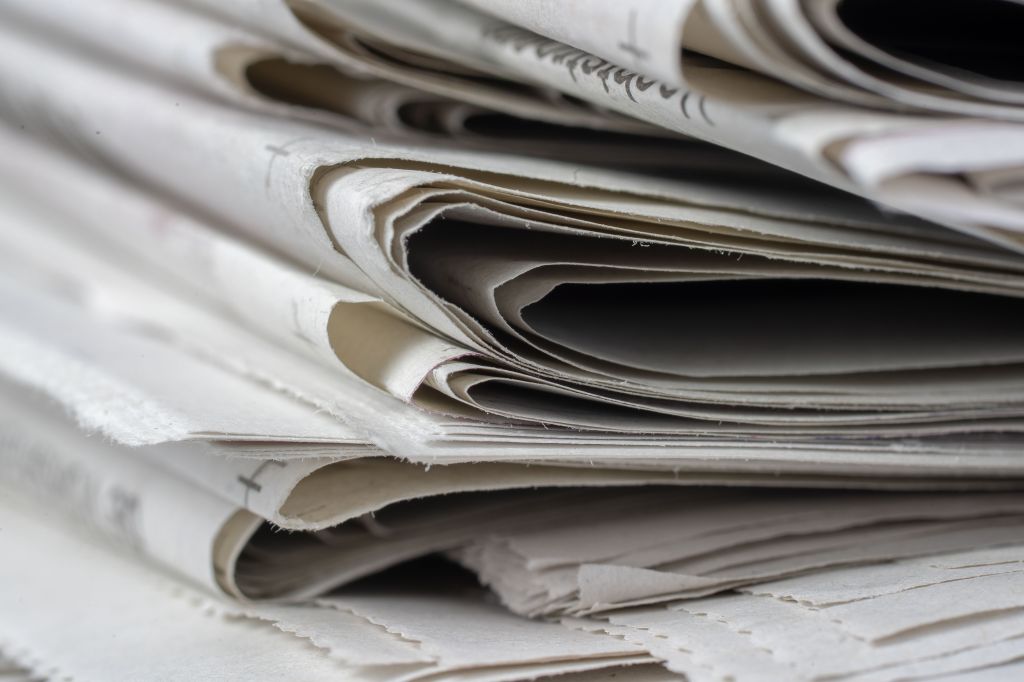
Maybe Chatham Asset Management can call the newspaper group the “Artificial Intelligence Chronicle.”
When I heard the news Thursday that the hedge fund that owns McClatchy’s 30 newspapers had decimated what was once one of the nation’s great newspaper groups, I immediately thought about two members of the McClatchy family I had the privilege of knowing: C.K. McClatchy and James B. McClatchy.
They and their family believed deeply in honest, thoughtful, locally focused journalism. They spent their lives building a newspaper company that could compete on a national stage while remaining firmly committed to the communities it served. They understood that the strength of a newspaper was not simply in the bottom line, but in the trust it earned from its readers and the journalists it employed.
As most of you know by now, the hedge fund has laid off reporters across most of its newspapers, which stretch from California to Florida. For those of us who spent our careers working in the trenches of local journalism, Thursday’s news was a gut punch.
The strategy appears increasingly clear: operate with as few journalists as possible, produce as much content as possible using artificial intelligence to generate variations of stories rather than investing in the people who know these communities and understand the importance of reporting them well.
What Chatham Management seems not to understand is that the public can see through this strategy. Readers know the difference between journalism produced by people who care about their communities and a stream of cheaply produced, AI-generated knock-offs. And when readers lose faith in a newspaper, they stop paying attention, and, ultimately, stop paying for it.
That is what makes Thursday’s news so painful. What was once a respected newspaper company built on journalism, community and public trust is being stripped down in the pursuit of short-term financial returns by a bunch of investors chasing dollars.
This is the company I worked at for 48 years, and one where I stated as a vacation relief reporter and ended my career as executive editor.
I understand that a newspaper must make money to survive. But there’s also a higher calling.
The consequences of Chatham’s moves are are being felt not only by the journalists who lost their jobs, but by the communities that are losing the reporting they depend on.
A cynical newspaper buddy boiled the news down to this: “A hedge fund is going to do what a hedge fund does, and no one is going to change that outcome.”
When McClatchy went into bankruptcy a few years ago, I found myself hoping that Chatham was the least-worst of all the hedge funds that might buy it. And, for a while, they fooled me. They seemed genuinely interested in creating thoughtful journalism and giving local news a chance.
But eventually their investor instincts kicked in. They bought into the idea that AI could save local news, even if there are no local reporters left to produce it.
And that’s the part I find hardest to accept. AI may be able to generate something that looks like news. But local journalism isn’t simply the production of words. It’s reporters knowing their communities, showing up at meetings, asking questions, developing sources, noticing what doesn’t make sense, and understanding why a seemingly small story matters.
In the next few days, there will be many people assessing the significance of Chatham’s terrible decision. But we don’t have to look much further than its name: Chatham Asset Management.
They manage assets. They don’t manage journalism.
And that distinction may be the most important thing to understand about what is happening to local news.





Leave a comment