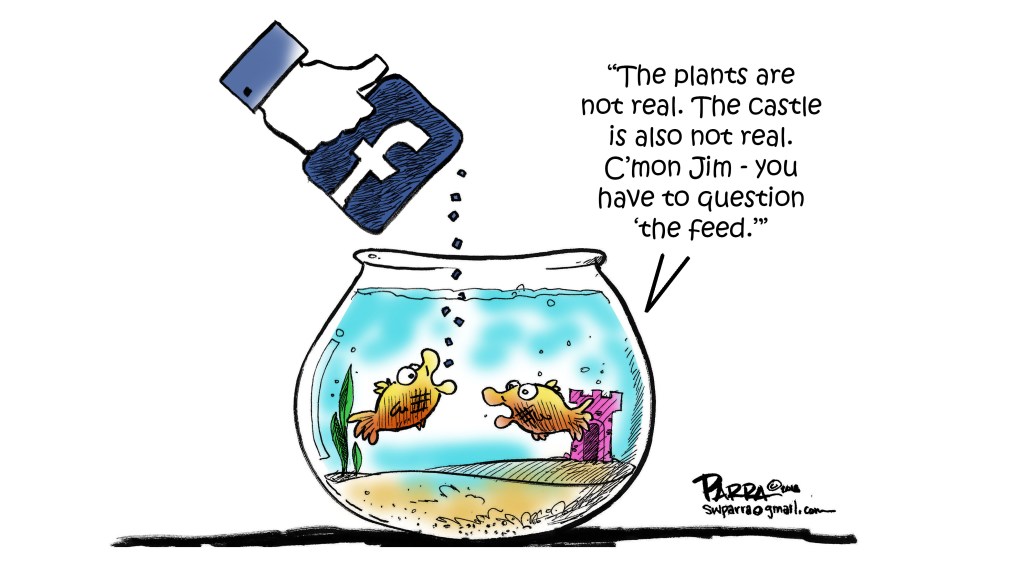
Use these tips and you won’t be caught sharing ‘fake news’ on social media

Concerned about fake news? Here are eight smart ways to determine if the news content you are seeing on your digital device is legitimate.

  1. Look past your personal biases. This is crucial in sorting out news content. We often believe the worst about people or politicians we despise. Those biases can blind us to what we are sharing on social media, even if there are red flags that suggest the stories may not be factual.
  2.  Do you recognize the source of the news item? Be skeptical if it comes from a source that you’ve never heard of. That doesn’t mean it’s false, and it could come from an obscure but legitimate news outlet. But take extra time to confirm the facts on sites you may not recognize.
  3. Use search engines to see if anyone else is reporting this particular story. If it is as big a story as being promoted in the headline or share text on a social media site, surely other news outlets will have a version of the story at some point.
  4. Check the link in your browser. Many fake news sites try to mimic actual news sites. The link might have a slight variation from the legitimate news site. If the link looks odd, that’s another red flag.
  5. Look at other stories on the website. Does the content pass the “smell test?” Check out the writing style. Do the stories on the site have excessive capital letters, exclamation points, obvious grammatical errors, or other oddities that suggest the content may not be reliable?
  6. Read the “Contact Us” and “About Us” links. Are they working, and do they give information that is helpful? Can you email the story’s author?
  7. Go to fact-checking sites. Use them to see what they say about the news story before you post it on social media. Try factcheck.org, snopes.com, politifact.com, or other fact-checking sites. And if you have questions about the quality of a particular fact-checking site, use multiple fact-checking sites to verify the information.
  8. Be skeptical. It will help make you a smart news consumer.
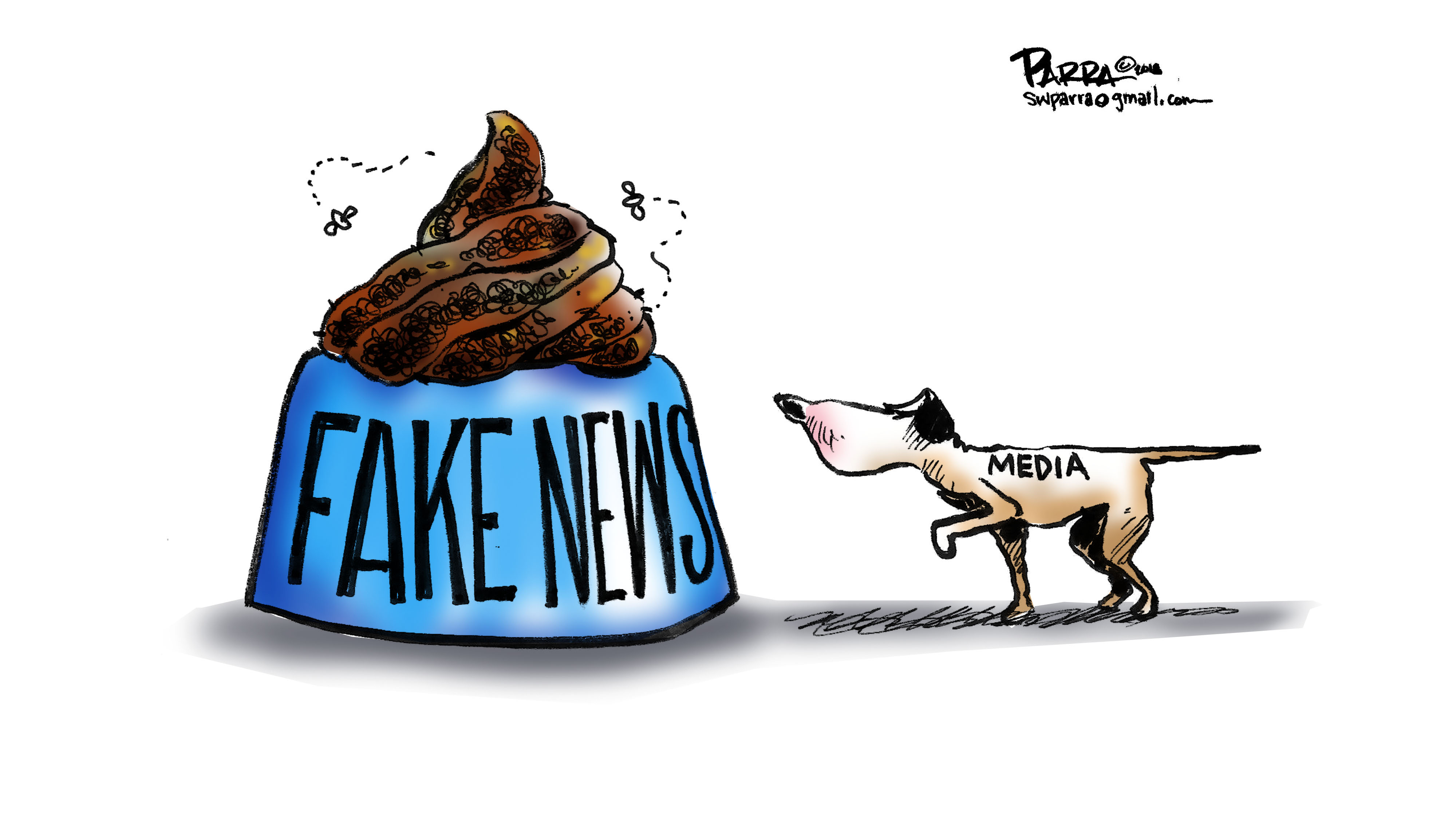
    Watchdog Media
    Editorial Cartoon by SW Parra. swparra.wixsite.com/mysite

Posted

in

,

by

Tags:

Telling the stories of health care in the San Joaquin Valley

A health reporting fellowship amplifies vital stories of health care in the Central Valley, making impactful journalism accessible to newsrooms across the region. One of the challenges in this era of shrinking newsrooms is giving enough attention to important public policy issues that don’t drive clicks in the way crime, restaurant openings, traffic, weather, and…

Valley Public Radio overcomes Congress’ move to silence public radio in America

Congressional defunding of public broadcasting has created challenges for many stations, but KVPR is using the cuts as a catalyst for growth. It has been just over a year since the Republican-led Congress cut federal funding for public broadcasting, citing allegations that PBS and NPR stations exhibited a liberal bias. The intent was clear: to…

How artificial intelligence is changing the news business

For journalists, the rise of AI is creating new challenges, particularly around trust with readers, viewers and listeners. You can’t get very far into a conversation with journalists and journalism educators before artificial intelligence starts to dominate the discussion. I found myself in that conversation over dinner recently, and I asked the working editors at…

Comments

4 responses to “Use these tips and you won’t be caught sharing ‘fake news’ on social media”

  1. cyndyhodges Avatar
    cyndyhodges

    This is such great info. Thanks!

    Like

  2. How to spot fake news as the coronavirus spreads – The College of Arts and Humanities at Fresno State Avatar

    […] If you’re wondering if something you saw on social media is real, check out Buzzfeednews.com’s running list of hoaxes spreading about the coronavirus. Also, take a look at the eight tips to spotting fake news below compiled by the Fresno State Institute for Media and Public Trust. […]

    Like

  3. […] State’s Institute for Media and Public Trust also recommends several tips to determine legitimate digital content. Here are just a […]

    Like

  4. […] State’s Institute for Media and Public Trust also recommends several tips to determine legitimate digital content. Here are just a […]

    Like

Leave a comment